

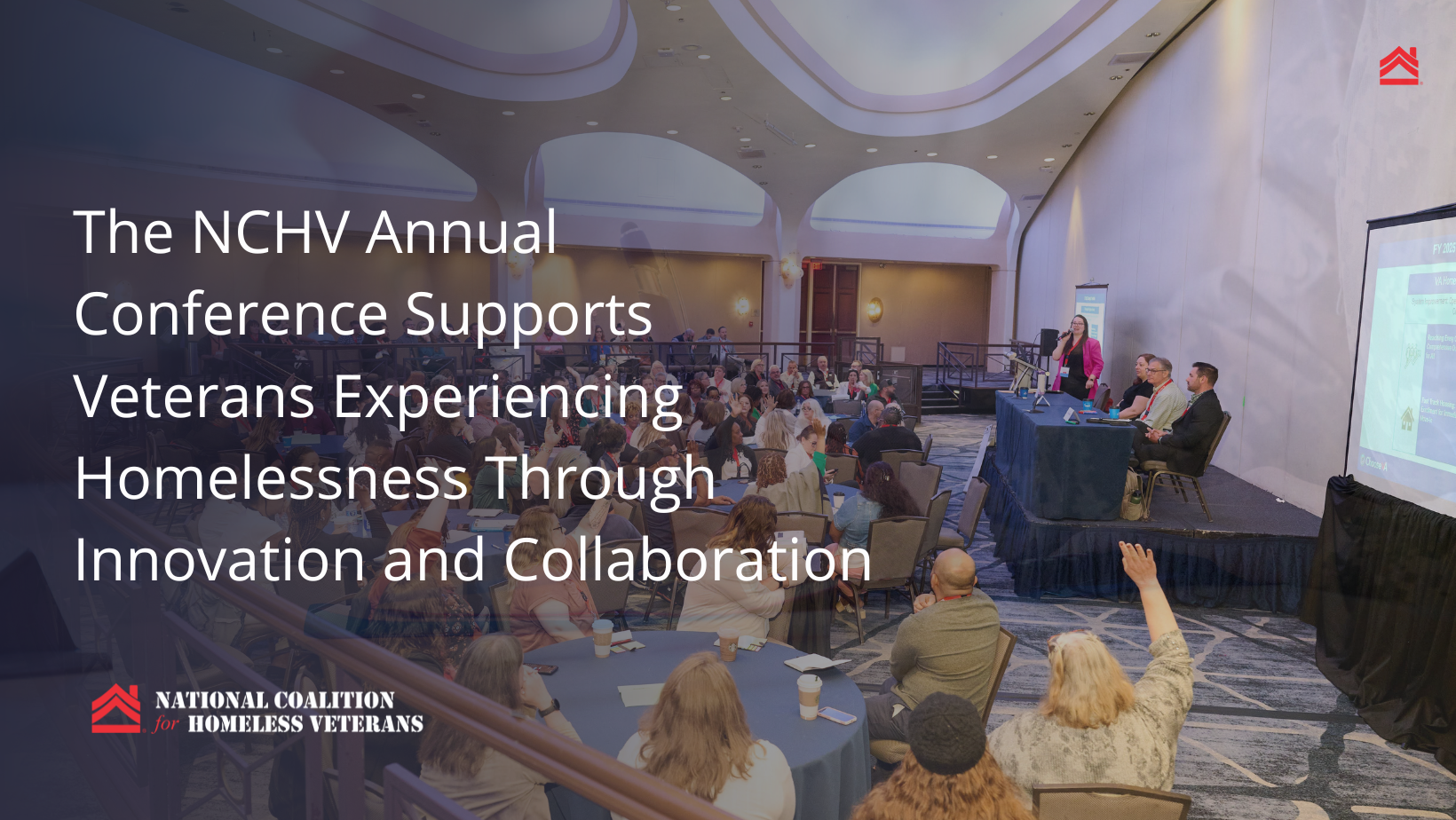
The NCHV Annual Conference Supports Veterans Experiencing Homelessness Through Innovation and Collaboration
The National Coalition for Homeless Veterans (NCHV) was created in Washington, D.C. 36 years ago to combat veterans homelessness. Next week, leaders, service providers, advocates, and partners from across the country will gather for the 36th NCHV Annual Conference. It comes at an important moment as a new generation of service members return from global conflicts. This is our moment to both reflect on what we have achieved this year, and to focus on addressing the challenges ahead of us so that this next generation of veterans does not repeat history.
Since 2009, our nation has cut veteran homelessness by more than in half, with nearly one million veterans and their family members becoming permanently housed or prevented from becoming homeless thanks to the tireless efforts of this community. However, nearly 33,000 veterans still experience homelessness on any given night. As more veterans return home after serving in global hotspots like Syria, Afghanistan, and Iran, they will face a tough job market coupled with skyrocketing housing costs in many communities. These are strong headwinds for veterans, their families, and all Americans living on the edge of homelessness.
As a nation, we have an obligation to ensure every veteran facing a housing crisis has access to safe, decent, and affordable housing paired with the support services needed to remain stably housed. Decades of experience have taught us how to rise to this challenge.
A major policy success of this movement is the creation of HUD veteran housing vouchers paired with support and case management from VA. Yet, in many communities, veterans with vouchers still cannot find available and affordable units. When rents rise faster than assistance, the gap widens. Sustained federal support, along with state and local action to expand the affordable housing supply, is essential.
Not all veterans have access to these vital programs. Veterans with other-than-honorable discharges, as well as some members of the Guard and Reserve, still face barriers to earned benefits. Congress should expand eligibility to ensure these programs reach all veterans in need. VA must also ensure it is referring eligible veterans to these programs.
Recent federal policy changes must also be carefully examined to ensure veterans are given the support and dignity they deserve. In March, the Department of Justice and VA announced an agreement to facilitate guardianships for vulnerable veterans. In limited cases, the appointment of a legal guardian can help veterans access treatment and transition safely to more appropriate care settings. However, guardianship and other forms of involuntary intervention are serious legal actions that must be used sparingly, with strong safeguards, and always with the best interests and rights of the veteran at the center of the process.
Public concerns about safety and crime have led to a renewed focus on enforcement approaches to homelessness at the federal and local levels. While community safety must always be a priority for any approach, decades of research show that people experiencing homelessness are more likely to be victims of violent crime than perpetrators. Permanent supportive housing approaches are effective, protect veterans, and save taxpayer dollars in the longer term.
Ending veteran homelessness continues to benefit from bipartisan support, making needed updates to federal services and ensuring their sustainability. By including NCHV in future policy decisions, our federal partners and veterans that we both serve, will benefit from our decades of expertise. We have played this important advisory role for decades, resulting in improved outcomes for veterans.
We will continue to work until no veteran is homeless.